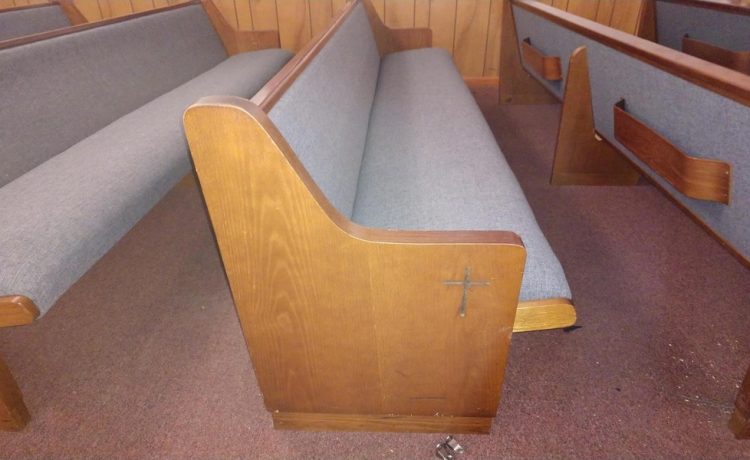
When a congregation decides to renovate its worship space, seating is almost always at the center of the conversation. And once the decision is made to go with pews, the next big question comes quickly: should they be upholstered? If you’ve started researching church pew upholstery, you already know there’s more to the decision than picking a color. The fabric type, foam density, and construction quality all determine how long the upholstery holds up, how comfortable it feels during long services, and how well it suits your worship environment for years to come.
This guide breaks down the key choices so your building committee can move forward with confidence.
Why Upholstery Matters More Than Most Committees Expect
Pews are a long-term investment. A well-built set of custom pews can last decades with proper care. The upholstery, though, takes the daily wear. It absorbs the weight of congregants week after week, faces spills, sunlight, humidity, and the occasional children’s program. Choosing the wrong fabric or foam for your environment doesn’t just affect comfort; it affects how quickly you’ll need to replace or re-do the work entirely.
That’s why the upholstery decision deserves as much thought as the wood finish or the pew style.
Foam: The Foundation of Comfort
Before you ever choose a fabric, the foam underneath it sets the tone for the sitting experience. Not all foam is the same, and in a worship setting where people sit for extended periods, this matters.
Density and ILD Rating
Foam is rated by two measurements that work together: density and ILD (Indentation Load Deflection). Density refers to how much the foam weighs per cubic foot, while ILD measures firmness, or how much pressure it takes to compress the foam by a certain percentage.
For church pew upholstery, high-density foam is the standard recommendation. Lower-density foam tends to break down faster under repeated use. After a few years, you may notice the pew seat looking uneven or feeling flat. High-density foam holds its shape significantly longer and maintains consistent comfort across the full life of the upholstery.
Foam Thickness
Thickness is another consideration that often surprises building committees. A common assumption is that thicker foam automatically means more comfort. In practice, the right thickness depends on the existing pew seat depth and how the upholstery will be attached. A professional furniture manufacturer can walk your committee through what works best for your specific pew profile.
Foam and Moisture
In sanctuaries where humidity is a factor, open-cell foam can absorb moisture over time. Some manufacturers address this by using a moisture-resistant barrier or selecting foam products designed for environments with humidity variation. This is worth asking about if your building deals with seasonal humidity swings.
Fabric: What to Look for Beyond Appearance
This is where most committees spend a lot of time, and understandably so. The fabric affects the visual tone of the entire worship space. But aesthetics should be weighed equally against performance.
Polyolefin Fabric
Polyolefin is one of the most widely recommended fabric options for church and synagogue seating. It’s a solution-dyed fiber, which means the color runs all the way through the fiber rather than sitting on the surface. This makes it highly resistant to fading, even in sanctuaries with significant natural light. It also cleans easily, which is a practical consideration for any high-traffic worship space.
Polyolefin holds up well under heavy use. It resists staining, doesn’t attract moisture the way some fabrics do, and tends to maintain its appearance across many years. For congregations that want durability without sacrificing a refined look, it’s a dependable choice.
Woven and Cut Pile Fabrics
Woven fabrics and cut pile options (similar to traditional upholstery velvet) are popular in more formal or liturgically traditional sanctuaries. They provide a rich, elegant appearance that complements dark-stained hardwood pews beautifully. The trade-off is that these fabrics typically require more attention to maintenance and may show wear more visibly over time in high-traffic areas like aisle seats.
If your congregation leans formal and the worship space sees moderate foot traffic, these fabrics can be an excellent match. If your sanctuary hosts multiple services, events, and community programs every week, a more performance-oriented fabric may serve the space better long-term.
Pattern and Color Considerations
Patterns can add warmth and visual interest to a pew row. Solid fabrics, on the other hand, tend to photograph more cleanly and work well in spaces with a lot of visual detail in the architecture. Color choice connects directly to the wood finish, flooring, and wall tones in the space.
One practical note: darker fabrics show less soiling over time but may fade more noticeably in sun-exposed areas. Lighter fabrics can brighten a dark interior but require more frequent attention to maintain their appearance. A good manufacturer or design consultant can help your committee think through these trade-offs before committing.
Construction: How Upholstery Is Attached to the Pew
The way upholstery is constructed and attached to the pew is just as important as the materials themselves.
Tight Seat vs. Loose Back
Some churches prefer a tight seat, where both the seat and back of the pew are fully upholstered in a continuous manner. Others choose to upholster only the seat, leaving the pew back in its natural wood finish. This combination of upholstered seat and wood back is a classic look that balances comfort with traditional aesthetics.
Both approaches work well. The choice often comes down to the style of the pew and the overall design direction for the worship space.
Edge Construction and Corner Detail
How the upholstery wraps around the corners and edges of the pew seat speaks directly to the quality of craftsmanship. Well-executed upholstery should sit evenly, with corners that are consistent and tailored. Over time, poorly executed edges tend to peel, shift, or show uneven wear first.
When evaluating a manufacturer, it’s worth asking to see samples or photos of finished pews up close. The edge detail tells you a lot about the level of care and skill that went into the work.
Attachment Method
Upholstery can be attached in ways that allow for future reupholstery, which is an important consideration if your congregation plans to maintain the pews over several decades. Some installations are designed for easier replacement when the time comes. Others are more permanent. If long-term maintenance is a priority, discuss this with your furniture manufacturer before the order is placed.
Durability and Maintenance: Setting Realistic Expectations
Even the best upholstery requires some level of care. Here are practical maintenance points that building and facilities teams should keep in mind.
Regular Cleaning
Fabric pew upholstery should be vacuumed regularly to remove dust and debris before it works into the fibers. For spills, blotting immediately with a clean cloth is the best first step. Avoid scrubbing, which can push the stain deeper or damage the fabric surface.
For deeper cleaning, follow the manufacturer’s recommendations for the specific fabric used. Many performance fabrics, including polyolefin, can handle mild water-based cleaners without damage.
Sunlight Exposure
UV exposure fades fabric over time, even in solution-dyed options. If your sanctuary has large stained glass windows or south-facing clear glass, consider UV-filtering window treatments. This simple step can add years of life to both your upholstery and your wood finish.
Reupholstery as a Long-Term Strategy
At some point, upholstery will need to be refreshed. Rather than viewing this as a failure, it can be planned for as part of a long-term stewardship strategy. Many churches and synagogues find that refinishing the wood and reupholstering at the same time gives the worship space a dramatic, renewed appearance at a fraction of the cost of full replacement.
A Note on Synagogue Seating
Much of what applies to church pew upholstery also applies to synagogue seating. Foam density, fabric performance, and construction quality all matter in a synagogue context just as they do in a church. The terminology differs, but the underlying considerations are consistent. Synagogue committees planning a renovation or new build should apply the same questions to their seating decisions.
Final Thoughts
Choosing upholstery for your pews isn’t just a decorative decision. It’s a functional one that will affect congregant comfort, maintenance workload, and the long-term appearance of your worship space for decades. Taking time to understand the foam options, fabric types, and construction methods before signing off on an order is time well spent.
If your committee is early in the planning process, working with an experienced church furniture manufacturer who can walk you through these decisions in the context of your specific space makes the entire process considerably smoother. The goal is seating that your congregation is still grateful for ten, twenty, or thirty years from now.
New Holland Church Furniture has been crafting custom church and synagogue seating since 1950. As the nation’s leading manufacturer of radius-curved pews, they bring over 70 years of experience to every project, with design support, professional installation, and a commitment to quality built into every piece.