


When Rock Salt Stops Working: Keeping Winnipeg Driveways and Walkways Safe at Minus 30

Most Winnipeg homeowners have had this experience at least once. You scatter a generous handful of rock salt across the front steps on a frigid morning, and by lunchtime the crystals are still sitting on top of the ice, looking exactly as they did when they landed. Rock salt is cheap and familiar, which is why there is a bag of it in so many garages, but it only works within a certain temperature range, and a Winnipeg January spends a lot of time below it. Knowing where that range ends, and what to reach for once you pass it, makes the walk to the car safer and saves a fair amount of wasted salt.
Why Salt Gives Up in Deep Cold
Salt melts ice by dissolving into a thin film of water and lowering the temperature at which that brine freezes. As the pavement gets colder, the reaction slows, and there is less moisture available for the salt to dissolve into. The Transportation Association of Canada’s guidance on salt use for private roads, parking areas and walkways describes sodium chloride as generally ineffective below about minus ten degrees Celsius, even though its theoretical limit in a lab is around minus 21.
Winnipeg spends much of its winter beyond that point. Environment and Climate Change Canada’s climate normals for the city show an average January daily low of about minus 21, with roughly six January nights a year falling below minus 30. On those days, spreading more rock salt mainly adds residue that gets tracked into the front hall and washed into the lawn in the spring, without making the steps any less slippery.
What to Use Below Minus Ten
The alternatives fall into two groups: melters that keep working at lower temperatures, and grit that adds traction without melting anything. A sensible household keeps a little of each and chooses according to how cold the pavement is on the day, rather than reaching for the same bag all winter.
Lower-temperature melters
Calcium chloride is the usual step down from rock salt, and TAC lists its practical working temperature at about minus 29 degrees, while magnesium chloride reaches about minus 15. Both cost more per bag than rock salt, so most people save them for the places that matter most, such as the front steps, the landing outside the door and any short slope on the walk. A light, even scatter works better than a heavy dose, and reading the bag for its rated temperature tells you quickly whether it suits a Winnipeg cold snap.
Sand and traction grit
When the pavement is too cold for any melter to do much, traction becomes the goal. The City of Winnipeg switches from salt to treated sand on its main streets once temperatures fall below minus seven. At home, a bucket of sand or fine grit by the door works the same way, giving grip immediately on the coldest mornings. It does need to be topped up after fresh snow and swept off the walk in the spring, so it is worth keeping a stiff broom handy along with the shovel.
Clearing First, Treating Second
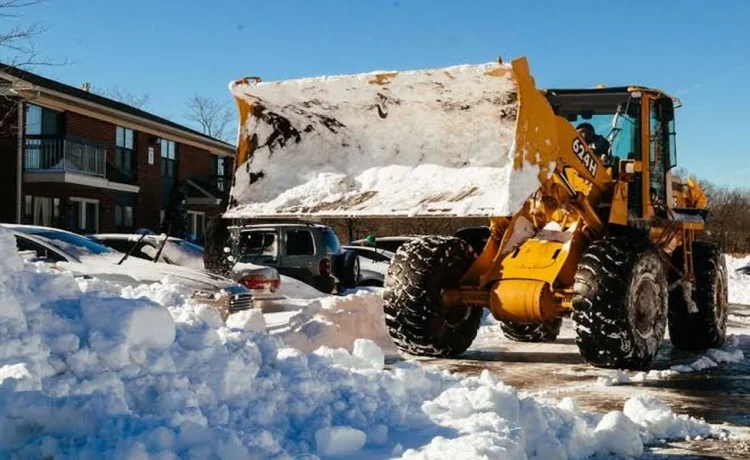
No product works well on top of packed snow, which is why prompt clearing matters more than anything you spread afterwards. A thin layer of fresh snow comes off a driveway in minutes, while the same snow left for a day gets driven on, walked on and frozen into a crust that no melter will lift at minus 25. For households that cannot always get out right after a snowfall, snow clearing for Winnipeg homes and small rentals keeps the surface down to the pavement so that whatever goes down afterwards has a chance to work.
It helps to know how a service handles ice before you book. Some residential providers offer Winnipeg driveway and walkway clearing with ice melt as an add-on that goes down during each snowfall visit, while separate trips to treat ice between snowfalls are usually arranged and billed on their own. Asking that question up front tells you what you will still need to handle yourself on the days in between.
Contact “PROPERTY WERKS” For More Information:
Address
Phone
(403) 239-1269
Hours of operation
Weekdays 9 a.m. to 5 p.m.
https://www.propertywerks.ca/winnipeg
Duplexes, Fourplexes and Shared Walks
Owners of small rental buildings face the same cold with a few extra complications. Shared front walks, steps to basement suites and side paths often fall between tenants who each assume someone else will deal with them, and few tenants keep a calcium chloride product on hand. Manitoba’s Occupiers’ Liability Act expects an occupier to take reasonable care that visitors are reasonably safe on the premises, so it makes sense to decide in writing who clears and treats each walk, and to leave a pail of grit where tenants can reach it.
Simple records help as well. A note of when the walks were cleared and what was put down during a cold snap shows that the property was looked after sensibly for the conditions, and it settles questions quickly if a tenant or visitor raises a concern later in the season. A short list of the walks you are responsible for, kept with the lease, makes the whole arrangement easier to explain to a new tenant each fall.
Dealing With the Water That Makes the Ice
Much of the ice on a Winnipeg walkway starts as meltwater. Snow piled at the top of a sloped driveway, a downspout emptying across the path or a roof edge dripping onto the steps can glaze a clean surface on a sunny afternoon, and it freezes hard the moment the sun goes down. Pile snow on the low side of the property, away from walks and the foundation, extend downspouts toward the lawn and note any spot where ice keeps returning, because those patches tend to reappear in the same place every winter. Fixing the source of that water often does more than any bag of melter, and it means the product you do use goes further on the nights when Winnipeg drops toward minus 30.