

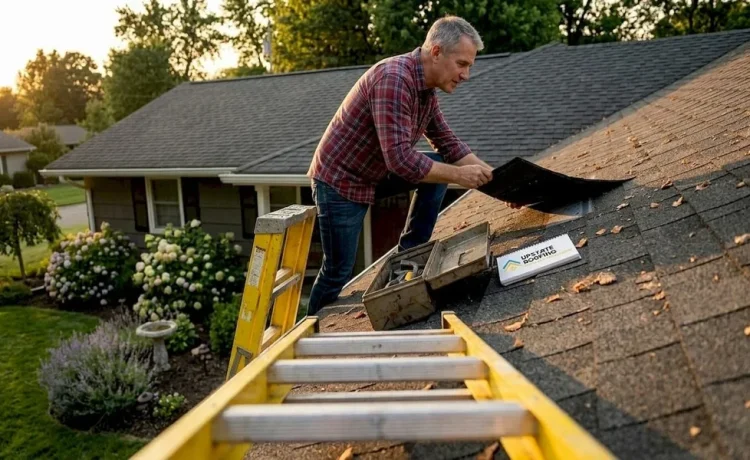
The first sound of replacement day is a flat shovel scraping under old shingles, followed by the dull thud of debris landing in a dumpster. For anyone planning a roof replacement in Tea, that noisy first hour is when the real quality of the job starts to show, because everything hidden for twenty years is suddenly out in the open. Local outfits such as RF Custom Construction, which offers same business day estimates, a bilingual team and a five year workmanship warranty, with the owner on site and more than two decades of roofing behind the work, tend to say the same thing about it. Shingles get all the attention, yet a new roof is really a stack of layers, and each one has a job.
Knowing those layers changes how an estimate reads. Two quotes that look far apart in price often differ in what sits underneath the shingles, not in the shingles themselves. So the useful way to understand a replacement is to build it the way a crew does, from the wood up.
Deciding the Old Roof Has Had Its Run
Before any layer goes on, someone has to decide the current roof is finished rather than repairable. Asphalt roofs in this climate usually last somewhere around twenty to twenty five years, though hail and poor attic ventilation can shorten that badly. The signs that point toward replacement instead of another patch are fairly consistent.
- Shingles curling at the edges or cupping in the middle, especially on the south and west slopes that take the most sun.
- Bare patches where granules have worn away, often matched by dark grit collecting in the gutters.
- Leaks showing up in more than one spot, which usually means the problem is the whole system rather than one bad seam.
- A deck that feels spongy underfoot or sags between rafters when viewed from the yard.
A roof with two or more of these is usually spending money on repairs it will never earn back. Most communities around Sioux Falls also require a building permit for a full reroof, and a legitimate contractor handles that paperwork rather than asking the homeowner to skip it.
The Wood Nobody Photographs
Once the old shingles and underlayment are stripped, the roof deck is exposed. On most local homes that means sheets of OSB or plywood, while older houses sometimes have spaced plank boards that need new sheathing laid over them before modern shingles can go on.
This is the moment a full tear off proves its worth. Rotted edges near the eaves, delaminated sheets around old leaks and nail holes that no longer hold get spotted and replaced. Laying new shingles over an existing layer skips this inspection entirely, which is one reason so many roofers in the region discourage overlays even where code technically allows a second layer.
Good contracts list a per sheet price for decking replacement in advance. Nobody can know how much rot hides under old shingles until they come off, so a fixed unit price protects both sides from an awkward conversation halfway through the job.
Metal That Guards the Edges
With solid wood in place, the edges come next. A drip edge is a bent strip of metal installed along the eaves and rakes so water rolls off into the gutter instead of wicking back into the fascia board. Current residential code calls for it, yet plenty of older roofs in the area were built without any.
Flashing is where leaks love to start. Step flashing weaves between shingles where a roof meets a sidewall, counterflashing tucks into chimney mortar joints, and rubber boots seal around plumbing vents. Reusing old flashing to save an hour is a common shortcut. Rubber vent boots in particular crack under prairie sun long before the shingles wear out, so replacing them during the reroof costs very little compared with chasing a leak five years later. Skylights deserve the same care, ideally with the manufacturer’s own flashing kit.
The Membrane That Winter Tests
Underlayment is the roof’s second line of defense, and in this part of South Dakota it carries more weight than most people realize. Because January temperatures average well below freezing here, code requires an ice barrier membrane at the eaves extending at least two feet inside the exterior wall line. That sticky, self sealing sheet is what stops ice dam meltwater from backing under the shingles and into the ceiling.
Valleys, where two slopes meet and funnel huge volumes of water, usually get the same membrane. The rest of the deck is typically covered with synthetic underlayment, which has largely replaced old felt paper because it resists tearing, lies flat in wind and does not wrinkle when it gets damp before the shingles go down.
Shingles Come Last for a Reason
Only now do the shingles arrive, and even here the details matter more than the brand name. Starter strips run along the eaves and rakes so the first course has a sealed edge that wind cannot peel back. Architectural shingles have mostly replaced the flat three tab style, offering heavier weight and a longer wind rating.
Hail is the deciding factor for many local homeowners. Class 4 impact rated shingles, frequently made with rubberized polymer asphalt, handle repeated strikes better than standard products and can earn insurance discounts with some carriers. Nailing pattern matters as well. Many manufacturers call for six nails per shingle in high wind zones instead of four, and nails placed too high or driven at an angle are a leading cause of blow offs.
Season plays a part too. Shingles rely on a heat activated sealant strip, so a roof installed during a cold late fall stretch may not bond until spring unless the crew hand seals each course.
Letting the Attic Breathe
The ridge is finished with a continuous vent covered by cap shingles, but it only works when the soffit vents at the eaves are clear to pull fresh air in. A replacement is the cheapest time to correct ventilation problems. Fixing them protects the new shingles from overheating in summer and keeps the deck cold in winter so snow does not melt and refreeze at the edges.
The Paper Behind the Shingles
A roof also leaves behind documents, and they deserve as much attention as the materials. Two different warranties usually apply. The manufacturer covers product defects, often with extended coverage only when the full system of matching underlayment, starter and ridge components is installed. The contractor covers workmanship, meaning the installation itself.
After a big hailstorm, out of town crews tend to flood the area, which is why the Federal Trade Commission publishes guidance on avoiding repair scams after severe weather. Its advice lines up with what experienced homeowners already know. Ask for proof of license and insurance, get every term in writing and avoid paying the bulk of the cost before work begins. For insurance claims, many policies hold back part of the payout as depreciation until the work is finished and a final invoice is submitted, so keeping that invoice and the permit sign off matters.
What a Finished Job Looks Like
The last hour of replacement day should be quiet and careful. Crews run magnetic sweepers across the lawn and driveway for stray nails, clear gutters of debris and walk the property with the homeowner. Photos of the completed roof, the warranty registration and the paperwork belong in one folder, because the next person to ask about this roof might be a buyer, an adjuster or a roofer two decades from now. A roof built right from the deck up gives every one of them a much easier answer.