

It usually starts with something small. A patch of tile in the hallway feels oddly warm under bare feet. The water heater seems to run more than it should. Or you hear a faint hiss when every tap in the house is off. Most people brush these off for weeks. By the time the signs are obvious, water may have been escaping under the concrete for a long time.
Homes in hot, dry regions are especially exposed to this problem, and local plumbers there see it often. A family-owned company like Apple J Plumbing Inc. lists slab leak repair, repiping and sewer line work among its core services, which shows how common the issue is in desert communities. When you understand why these leaks form and how they’re found, it’s much easier to act early instead of paying for a flooded subfloor later.
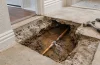
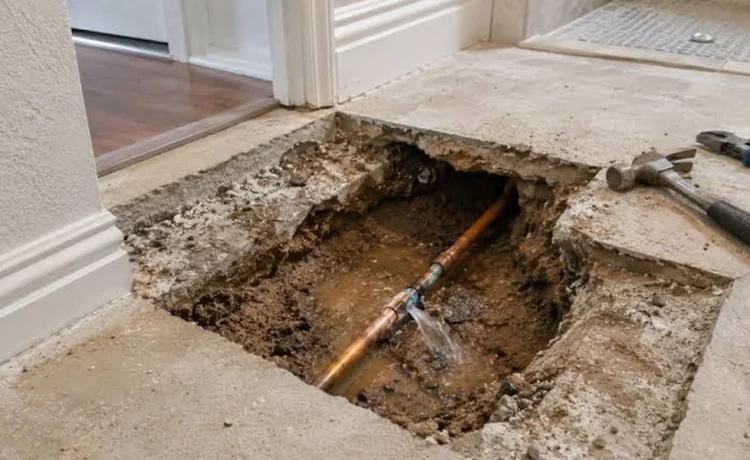
A slab leak is simply a leak in a water line that runs through or under a home’s concrete foundation. Many houses built on slabs have their supply pipes, usually copper, buried in the soil beneath the concrete or set into it. When one of those pipes fails, the water has nowhere obvious to go. It soaks into the ground, spreads under the slab, and sometimes rises slowly through flooring, baseboards or drywall.
Why the Ground Under a House Matters So Much
Concrete looks solid and permanent, but the soil under it moves. Clay soils swell when they get wet and shrink as they dry out. Desert landscapes swing between long dry stretches and short bursts of heavy irrigation or monsoon rain, so that movement happens over and over. Each cycle puts a little stress on pipes that are locked in place by the slab above them.
Water chemistry plays a part too
Many desert water supplies are naturally hard, carrying high levels of dissolved minerals. The U.S. Geological Survey explains that hardness mostly comes from calcium and magnesium. Over the years, those minerals can build up inside pipes and change how water flows through them. Combined with chlorine and small pH changes, this can wear copper down from the inside and leave pinhole leaks along the way.
Heat and friction add up
Hot water lines fail more often than cold ones. Hot water speeds up corrosion, and copper expands and contracts every time the heater cycles. Where a pipe touches concrete, gravel or another pipe, that constant small movement causes abrasion. A line can rub itself thin over ten or fifteen years without anyone noticing.
Installation shortcuts show up later
Some leaks go back to the day the house was built. A pipe kinked during installation, a poorly soldered joint, or a line laid directly against rough aggregate can all become weak points. These flaws can stay hidden for decades and then fail in a single season.
The Signs Worth Taking Seriously
Slab leaks rarely announce themselves with a puddle in the middle of the room. The clues are usually indirect, which is why people tend to explain them away. Pay attention if you notice any of these:
- A water bill that climbs without any change in how you use water
- Warm or hot spots on the floor, often over a hot water line
- The sound of running water when all fixtures are off
- Damp carpet padding, warped wood flooring or loose tiles
- Musty smells or mildew along baseboards
- New cracks in walls or flooring that line up with plumbing routes
- Lower water pressure at one or more fixtures
One sign alone doesn’t prove anything. Two or three together are a strong reason to investigate.
A Simple Test You Can Do Today
Your water meter is the easiest place to start. Turn off every faucet, appliance and irrigation zone in the house. Then look at the meter, which usually sits near the curb. Many meters have a small dial or triangle called a leak indicator. If it’s spinning while nothing in the house is using water, water is going somewhere.
You can also write down the meter reading, wait an hour or two without using any water, and check it again. A change points to a leak somewhere on the property. It won’t tell you whether that leak is under the slab, in the yard or inside a toilet tank, but it narrows things down quickly.
Household leaks add up fast across the country. The EPA’s WaterSense program estimates that household leaks waste nearly a trillion gallons of water a year nationwide. A hidden slab leak can be one of the worst offenders because it runs nonstop and nobody sees it.
How Professionals Find the Exact Spot
Not long ago, finding a slab leak meant breaking up large parts of the floor. Detection is much more precise now. Technicians usually start with a pressure test, isolating the hot and cold lines to see which one is losing pressure. From there, they use acoustic listening equipment that picks up the faint sound of water escaping under concrete.
Thermal imaging cameras help with hot water leaks, since the escaping water warms the floor above it. Some crews also put a tracer gas into the line and then use a sensor to find where it comes up through the slab. Used together, these tools can often pinpoint a leak to within a few feet. That means smaller openings and less damage to your floors.
Choosing Between Repair Approaches
Once the leak is found, there are generally three ways to deal with it, and the right choice depends on the age and condition of the plumbing.
A spot repair means opening the slab right over the leak, fixing the damaged section and patching the concrete. It works well for a single failure in otherwise healthy pipe.
Rerouting skips the slab entirely. The plumber abandons the leaking line and runs a new one through the walls or attic. This avoids jackhammering and is often faster, especially in homes where the floors are expensive to replace.
Whole home repiping makes sense when the pipes are old and have already leaked more than once. If one pinhole has formed in aging copper, others are often close behind. Replacing the system with PEX or new copper deals with the root cause instead of chasing one leak at a time.
Protecting Your Home Going Forward
Prevention isn’t complicated, but it does take consistency. Keeping water pressure in a sensible range takes stress off buried lines, and a pressure regulator can help if your supply runs high. In hard water areas, a softener or filtration system slows the mineral buildup that wears pipes down. Watering evenly around the foundation, instead of soaking one side and leaving the other dry, keeps soil movement under control.
Most importantly, don’t ignore the small clues. A warm spot on the floor or an unexplained jump in your bill costs very little to investigate. Leaving it alone can mean damaged flooring, mold behind walls and, in serious cases, problems with the foundation itself. Paying attention early keeps what’s under the slab a minor repair instead of a major renovation.